

Ok here is the question.
How do you locate heavy used spots by cats in a area without the aid of snow or your dogs.
Areas such as toilets, scratching posts, and scratches.
Now then I know how to locate prime areas but just don't have a eye for finding those spots. If im in a new area ill look for boulder piles, a lone big tree in a group of small ones, or maybe just a off color rock among others. Travel ways are pretty easy here as well. Check culverts with no water coming thru them, any sharp drainage that comes to a road usually will have a cat come thru every winter.
Also describe location of it, are they high on ridges or always in a canyon bottom or what?
Thanks.
Locating heavy cat activity.

-
easttntrapper
- Tight Mouth

- Posts: 128
- Joined: Sat Mar 31, 2012 10:32 pm
- Location: Limestone, TN
Re: Locating heavy cat activity.
Toilets, scratch posts, etc I normally find along the travel areas. toilets here are usually in the thicker areas and scratching posts are usually right along main travel corridors. I have noticed when trapping that some areas dont have sign like these. I have never found it in the river bottoms here for example. The mountains on the other hand I will see it from time to time. An old timer that taught me to trap told me that they are more likely to use "community" toilets and posts in areas with scattered cat populations. He claimed that they used these to keep track of other cats in the area. Seems to hold true here. If you aint finding the sign, then I would probably check the areas with the perferred prey and search the thickest travel routes. Of course thats for cats here, might not be the same where you are. Here the cats perferr game birds and rabbits. Beaver are #1 if they are around.
Re: Locating heavy cat activity.
I am surprised no one else had any input on this topic. Thanks for the advice trapper. My main goal was input to do off season scouting for new areas.
Re: Locating heavy cat activity.
Leg work. You have to spend a lot of hours out there. If the area is right you will soon be able to go to the sign just by looking at a area. Dewey

Re: Locating heavy cat activity.
Like Dewey said leg work, you need to train yourself. To give you an idea what your looking for. Find a nasty sh$t hole, the place you dont want to go at nite. Look at a map and find an old decomissioned timbered road that scirts above, around or through the horrible sh$t hole. Walk out the road and keep your eye keen when you come across any type of scent holding forest debris along the road(moss, bark or low lying bushes)cat sign will be there. Now look at the lay of the land(ridges, creeks, flats, wet or dry?) try to figure out why the cat picked this spot over others. Do this all summer. When the snow starts to fly this winter, cut cat tracks and pay extra close attention to how and why the cat worked the road. Watch your dogs. In most case's they are doing just what the cat did. Do this for several years and next thing you know you will notice this stuff naturally. Hope this helped. John.
Rowland-Walkers
Re: Locating heavy cat activity.
I have noticed that bobcats will normally move more than normal, about 3 times a year. Bobcat females will move a lot more during the spring time when she is searching for an undisturbed location to give birth to her kittens. Behind every female is normally from 1 to 3 Toms trailing her. The other big movement is when breeding season starts this normally happens during cat season. Another big movement is when the first hard freeze kills the leafs on the vegetation and leaves the bobcat more exposed to travel undetected. This bobcat activity normally happens during Bear season and most hunters miss this movement activity because they are more focused on bears.
In my area after the first couple big snowstorms ( which we really never had this year )you will notice a lot of bobcat movement activity. This movement is what I call " The bobcat migration". Cats will leave the high altitude locations and follow the prey species down to the lower less snow filled locations.
Something I have noticed that causes cats to really move is a storm heading in. Bobcats will really start to move to fill their bellies before the storm holes them up. It seems those storms that hit and miss all day long really gets the cats to stir.
Locating bobcat activity is as Dewey stated leg work. Preseason scouting is a must. When I used to hunt bear I spent a lot of free time finding the feed patches and bobcat hunting is no different. Find the prey species, water, rock piles, heavy tall brush, and you will find the cats. You must have an eye for finding sign. Finding sign in a lot of my terrain is tough. Bobcat droppings normally doesn't last too long with all the birds, pack rats, and insects packing it off. If you find some scat that is bleached white and you believe its old, try breaking it open you will be surprised how fast the dry weather will bleach it out. In a lot of cases it’s really not that old.
How I find a lot of bobcats is by looking for standing out features on goggle earth and mark the locations then walk into those features during the off-season to look them over.
Its amazing how much different the country looks from off the roads. Where I live it looks like a MARS waste land from the roads. Now from an aerial look you will start to recognize stand out features and water "Springs" you never knew existed from looking from the roads. Google earth has changed the way I scout for cats and saved me hundreds of dollars in wasted gas. A good GPS unit is worth its weight in gold when it comes to marking cat locations. I forget a lot of spots I scouted so by marking a way point it will allow you to never forget.
Bobcats leave sign if you know what to look for. Their sign is a lot like Mountain Lions. Look for scratching trees where bobcats use the tree to sink their claws into them to sharpen their claws. I call those types of trees "Bobcat Claw Trees", Bobcats also leave scratches just the same as the Lion. It’s a territorial marker just a lot smaller of a mound than a Lion makes. One thing I have noticed is a lot of times cat wont cover their droppings. They will scratch the area with a few kicks but wont cover their droppings. Come to think of it I hunt bobcats in a similar fashion as Chukar hunters hunt. Park and walk into the rims to find the cats.
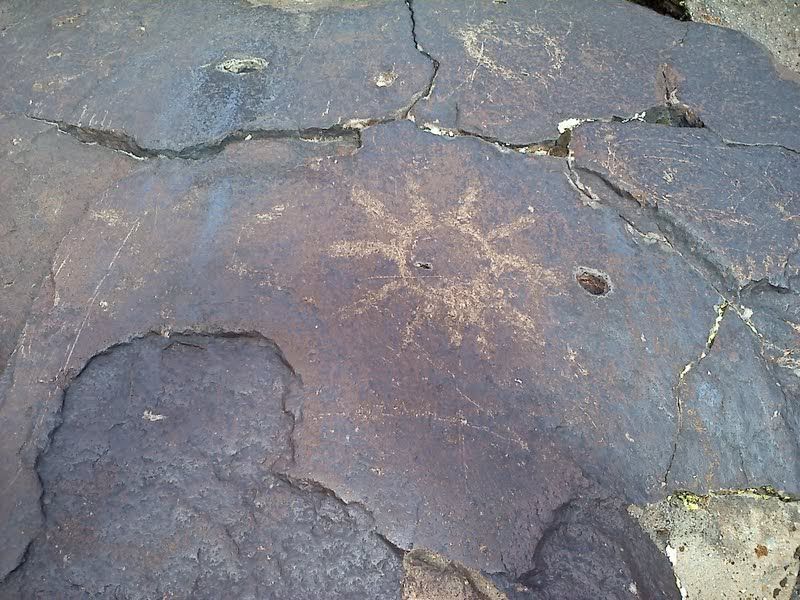
I have a lot of fun scouting for bobcat locations. I use this time of year to help get into shape and my sons love following along with me. They are constantly looking for old Indian arrowheads. We have found some really cool Indian petroglyphs while scouting for cats. Here's a few Indian rock drawing that we took some pictures of. I have a lot more but figured these were enough.
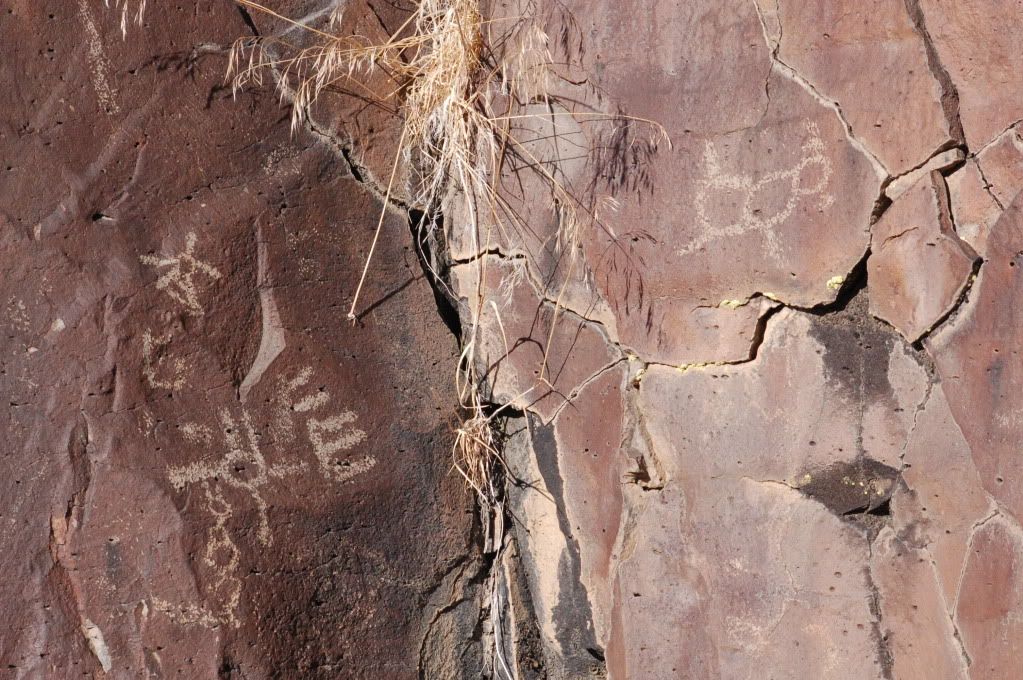
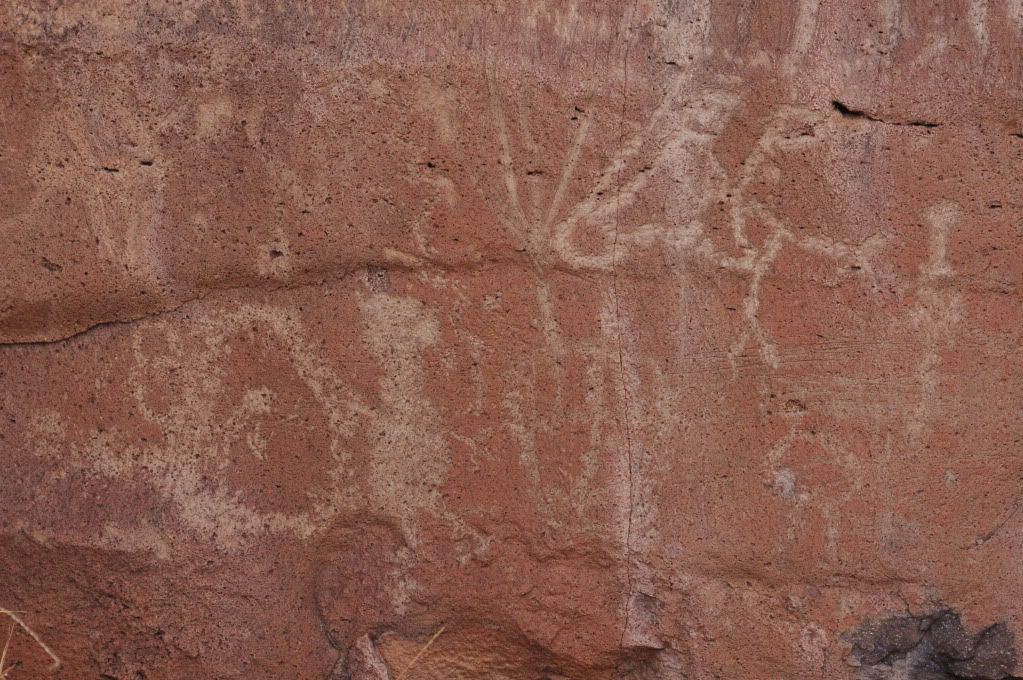
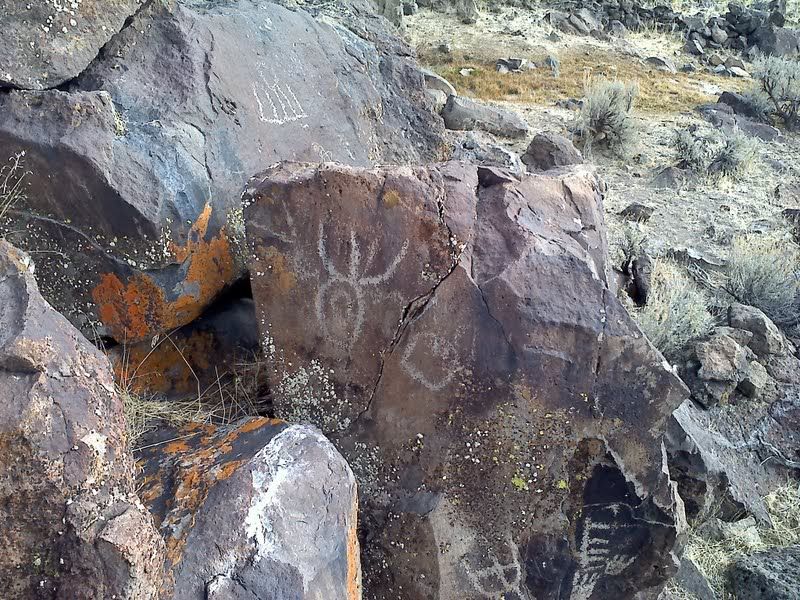
In my area after the first couple big snowstorms ( which we really never had this year )you will notice a lot of bobcat movement activity. This movement is what I call " The bobcat migration". Cats will leave the high altitude locations and follow the prey species down to the lower less snow filled locations.
Something I have noticed that causes cats to really move is a storm heading in. Bobcats will really start to move to fill their bellies before the storm holes them up. It seems those storms that hit and miss all day long really gets the cats to stir.
Locating bobcat activity is as Dewey stated leg work. Preseason scouting is a must. When I used to hunt bear I spent a lot of free time finding the feed patches and bobcat hunting is no different. Find the prey species, water, rock piles, heavy tall brush, and you will find the cats. You must have an eye for finding sign. Finding sign in a lot of my terrain is tough. Bobcat droppings normally doesn't last too long with all the birds, pack rats, and insects packing it off. If you find some scat that is bleached white and you believe its old, try breaking it open you will be surprised how fast the dry weather will bleach it out. In a lot of cases it’s really not that old.
How I find a lot of bobcats is by looking for standing out features on goggle earth and mark the locations then walk into those features during the off-season to look them over.
Its amazing how much different the country looks from off the roads. Where I live it looks like a MARS waste land from the roads. Now from an aerial look you will start to recognize stand out features and water "Springs" you never knew existed from looking from the roads. Google earth has changed the way I scout for cats and saved me hundreds of dollars in wasted gas. A good GPS unit is worth its weight in gold when it comes to marking cat locations. I forget a lot of spots I scouted so by marking a way point it will allow you to never forget.
Bobcats leave sign if you know what to look for. Their sign is a lot like Mountain Lions. Look for scratching trees where bobcats use the tree to sink their claws into them to sharpen their claws. I call those types of trees "Bobcat Claw Trees", Bobcats also leave scratches just the same as the Lion. It’s a territorial marker just a lot smaller of a mound than a Lion makes. One thing I have noticed is a lot of times cat wont cover their droppings. They will scratch the area with a few kicks but wont cover their droppings. Come to think of it I hunt bobcats in a similar fashion as Chukar hunters hunt. Park and walk into the rims to find the cats.
I have a lot of fun scouting for bobcat locations. I use this time of year to help get into shape and my sons love following along with me. They are constantly looking for old Indian arrowheads. We have found some really cool Indian petroglyphs while scouting for cats. Here's a few Indian rock drawing that we took some pictures of. I have a lot more but figured these were enough.
-
R Severe
- Bawl Mouth

- Posts: 250
- Joined: Fri Dec 28, 2007 12:24 pm
- Location: Oregon
- Location: Eastern Oregon
Re: Locating heavy cat activity.
Good thread Thomas.
CRA, those are cool pics.
Twice this winter I had pups find cat toilets, I noticed both bobs and lions had used these toilets under big fir trees.
I'd not noticed this before. Anyone spoted this in other parts of the country?
I like to walk pups as much as I can at a certain point, may as well be while scouting for cats.
CRA, those are cool pics.
Twice this winter I had pups find cat toilets, I noticed both bobs and lions had used these toilets under big fir trees.
I'd not noticed this before. Anyone spoted this in other parts of the country?
I like to walk pups as much as I can at a certain point, may as well be while scouting for cats.
Robin Severe
Eastern Oregon
Eastern Oregon
Re: Locating heavy cat activity.
Great information CRA. Alot of what you've said I've found to be true. However I did not know that cats moved alot pre winter when vegetation changes. I realize alot of leg work is involved but Im wanting to find a few honey holes to walk into this winter and just check those community spots to find toms rather than just taking a guess or driving all day to find nothing sometimes.
Robin thanks, Pepper was making races by the end of the season and even treed a bit. I haven't found many bobcat scratches yet, just a few. I noticed they were on ridges above big deep canyons myself, but was curious if I need to look low as well or my time best used walking rims. As for lions, I found where a bobcat and a lion crossed within 5 feet of each other on a road this winter. One went one way while the other was going the other way. I followed them out a ways to see if I found a dead bobcat but no such luck.
Give a call sometime and ill update you on Peppers progress.
Robin thanks, Pepper was making races by the end of the season and even treed a bit. I haven't found many bobcat scratches yet, just a few. I noticed they were on ridges above big deep canyons myself, but was curious if I need to look low as well or my time best used walking rims. As for lions, I found where a bobcat and a lion crossed within 5 feet of each other on a road this winter. One went one way while the other was going the other way. I followed them out a ways to see if I found a dead bobcat but no such luck.
Give a call sometime and ill update you on Peppers progress.