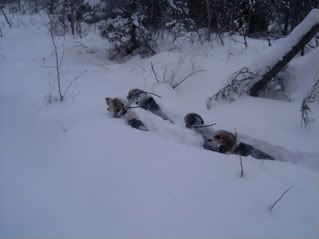
Dan Edwards wrote:fox hunter,
This is just my opinion but I absolutely believe 100% that most people put zero thought into making sure their dogs can kill a bob on the ground and I think that is one of the most important traits a hunting dog should have.
David,
I believe a dog should be able to be put down by himself and catch a bobcat or tree it before it should ever be called a bobcat dog.
Bait.
I recognized the first question at the head of this thread as bait because things had gotten too quiet in the cat fish pond. Then I watched myself take the bait against my own will. Now I recognize this response to me as more bait, and I am watching myself take the bait against my own will. Amazing. So here we go. I cant believe I got pulled into this again. You are truly a master baiter Dan.
I wish defining a bobcat dog was as simple for me as it is for you.
It is not. Virtually every different geographical area needs their own customized bobcat dog. And beyond that, there are several different reasons for hunting bobcats, and each reason needs its own customized bobcat dog. From what I have seen with my own eyes, there is only one geographical region that has been doing this long enough and with enough people involved to have actually developed a bobcat dog for that region: A dog that can do everything they need them to do from cold trail to tree. A good one is still hard to find, but they can be found by any one with persistence. There are regions where they have been tried and not found suitable. So there you have an example of specific regional needs.
As far as an example of specific personal reasons for hunting bobcats: I don’t want my dogs to kill bobcats. I want them to bay them and hold them in one place until I can get there. There have been momentss in the woods when someone in the air would have thought I was having a life threatening seizure. That is because I am throwing a fit realizing the cat is about to be caught and I have a killer dog on the ground. If I have a kill dog, I will try to send him with young dogs that are unlikely to make a catch. I have never had a kill dog that is also the dog forcing the cat to stop, but if I did I wouldn’t put him on the ground unless it was on a big tom and I want to collect his hide or remove him from my “bobcat farm” because he does not play nice with the kids. These kill dogs are worse than useless if I am guiding another hunter.
If I lived where bobcats were plentiful, I would probably feel differently. And if you lived where it might take you two days of hunting to find a workable coyote track to put your dogs on, you might understand what I am talking about. Dead bobcats don’t lay tracks for my dogs, and dead female bobcats don’t have babies for my dogs to eventually run. And dead and stretched bobcats are not very much fun for a paying client to shoot at. Dogs dont bark very long at a dead cat and many will not stay with it, except maybe Belle, and if you are very far behind, you might never find the cat. And if you are lucky enough to find it, Belle, with her taste for bobcat meat has already wrecked the hide.
So already you and I have a vastly different definition of a bobcat dog.
Next, I would have to ask of your definition: How many bobcat tracks does a dog need to cold trail and catch the bobcat before you allow it to be called a bobcat dog? One bobcat? Five bobcats? Fifty? And what percentage of tracks put down on does the dog need to catch the cat? 100%? Then there are no bobcat dogs in the world that I know of.
80%? Then there is only one bobcat dog I have ever raised and trained. 50%, 30%, 10%?
And what kind of conditions need to exist for the dog that catches how ever many the title requires? Snow? Desert dry? Moist but no snow?
Because, I will tell you that when the snow in Wisconsin is soft and chest deep on the dogs, with optimum humidity and barometric preasure, and the swamps are frozen solid, you have about a million bobcat dogs in Wisconsin. Under those conditions, every coon dog and bear dog and coyote dog in Wisconsin can catch a bobcat. But according to your definition they all deserve the title “bobcat dog”.
Then there are the dogs who eat sleep and breath bobcats. It is all they think about, it is the only thing they run, and they run three to five days a week. Some of them in the woods 200 days a year or more. Some of them are amazing cold trailers, they work out looses that would have ended the race completely if they had not been present. They work and work day after day after day, and when some of the sprinters have broken down and have to be laid up, these dogs are still working day after day. They are responsible for countless cats that would never have been caught with out them. They take colder tracks than any other dog in the pack, they never break from the track, they never give the cat a break, and they stay with it until the cat is jumped and then until every loss has been worked out and the cat is caught. Then while all the sprinters are limping back to the truck with the hunters and the bobcat, these dogs break off to the right or off to the left and start another bobcat track, and when that one is finished, they will be ready for another. But, by themselves alone they do not have the hyper turbo overdrive gear needed to stop a bobcat on the ground. By your definition, the sorry coon dog who catches a bobcat in the deep snow is a bobcat dog, and the dog I just described is not.
Bobcat hunting is not a simple thing. That is why, in my opinion, defining a bobcat dog is not a simple thing.
You know I am completely serious when I say I agree with almost everything you ever say about dogs Dan. ALMOST everything.